Product design case study · SumUp · Referral programme
Product growth: Referral programme
Limited referral visibility made programme decisions harder. I used research and product data to make referral value, timing and progress easier to understand.
My roleProduct designer
Core teamProduct manager · 2–3 full-stack developers 2 mobile developers · Data analyst Support: CS team
FocusDiscovery · Programme awareness Supported by Marketing
93%average programme evaluation from 1,700+ answers
SumUp · Refer a Friend programme.
01 Problem
Limited referral visibility made programme decisions harder
The programme was active, but it was difficult to see what motivated merchants, where referrals dropped off, how rewards were understood and how satisfied people were.
XX* %Percentage of shared referrals that became successful customers.FOR THE BUSINESS
Limited referral visibility weakened the Refer a Friend acquisition channel. Low adoption was accompanied by increased Customer Support demand, while incomplete tracking created noisy numbers and limited confidence in programme decisions.
XX* referralsTotal referral links or invitations shared by merchants.FOR THE MERCHANT
Merchants who never referred or stopped after one referral had less visibility into the reward and next steps, making continued participation harder.
02 My role
I led research and design direction for Refer a Friend across Product, Data, Mobile, Marketing, Sales and Customer Support.
Research
Combined interviews, referral data, surveys and usability testing. Introduced programme-level satisfaction research, achieving 93/100, above the company benchmark.
Design
Identified gaps in awareness, reward visibility and tracking. Designed entry points, offers, challenges, referral-code experiences and a reusable pattern later expanded to SumUp Bank.
Validation
Led global validation, created a data-validation plan and tracked adoption.
Impact
Increased link shares by 20%, reduced Customer Support tickets related to programme visibility and informed the product roadmap.
03 Challenge
The referral programme was running, but its value was difficult to measure.
Multiple touchpoints existed, but there was little evidence of awareness, usage or satisfaction.
How might we
Make referral awareness, progress and programme value easier to understand, track and improve?
04 Process
How I turned the current state into the next action
01 · Data usage collection
Analysed referral behaviour across merchants who never shared, shared once or shared repeatedly, alongside referral shares and conversion data.
02 · Interviews & usability testing
Combined interviews with moderated and unmoderated usability testing to understand motivation, friction and programme awareness.
03 · Tracking adoption and usage
Defined adoption tracking for shares, repeat referrals and conversion, but left the company before the measurement system matured.
05 Solution
Five ways the referral experience became easier to discover, use and measure.
01 · Reframe the experience
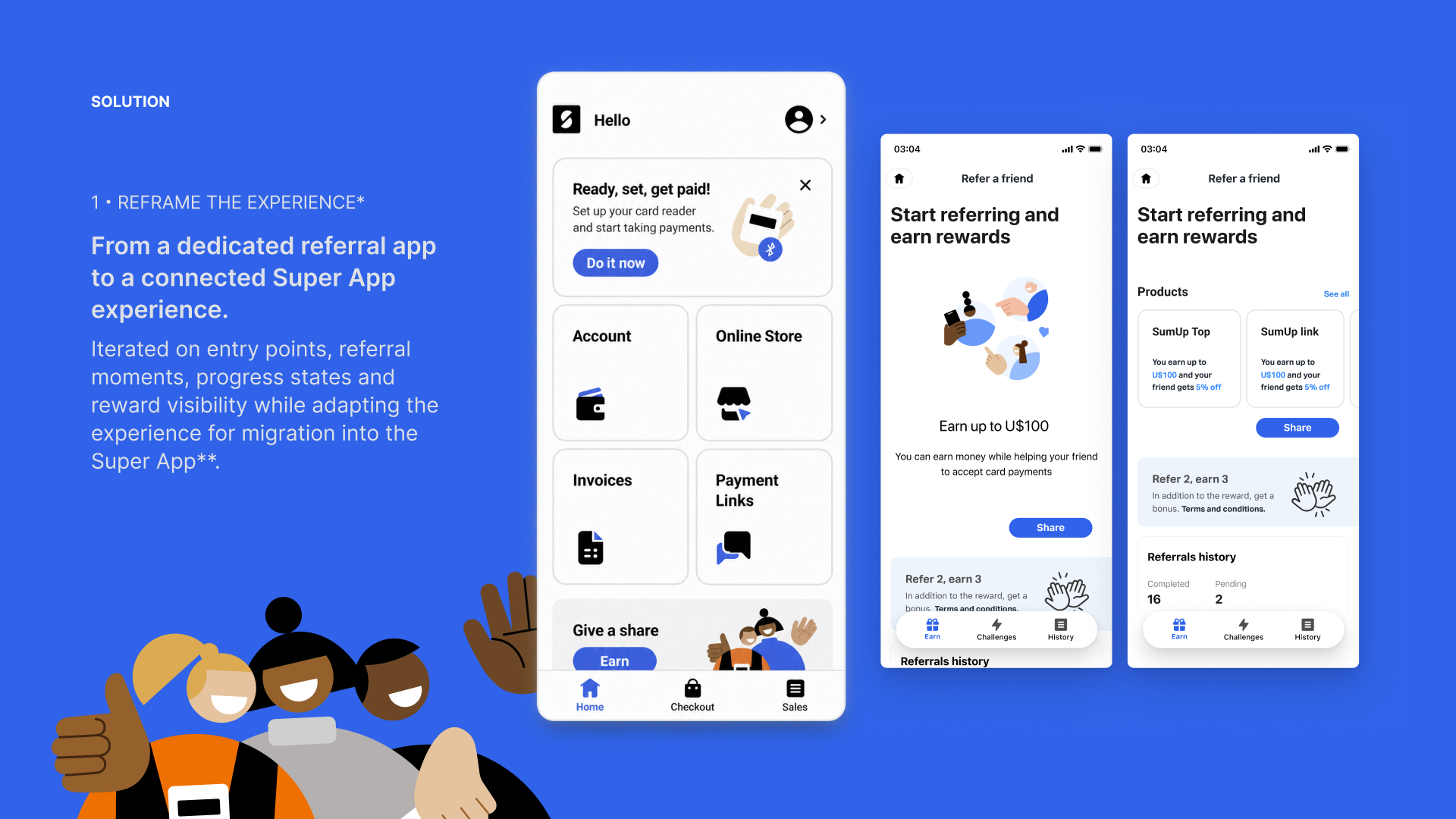
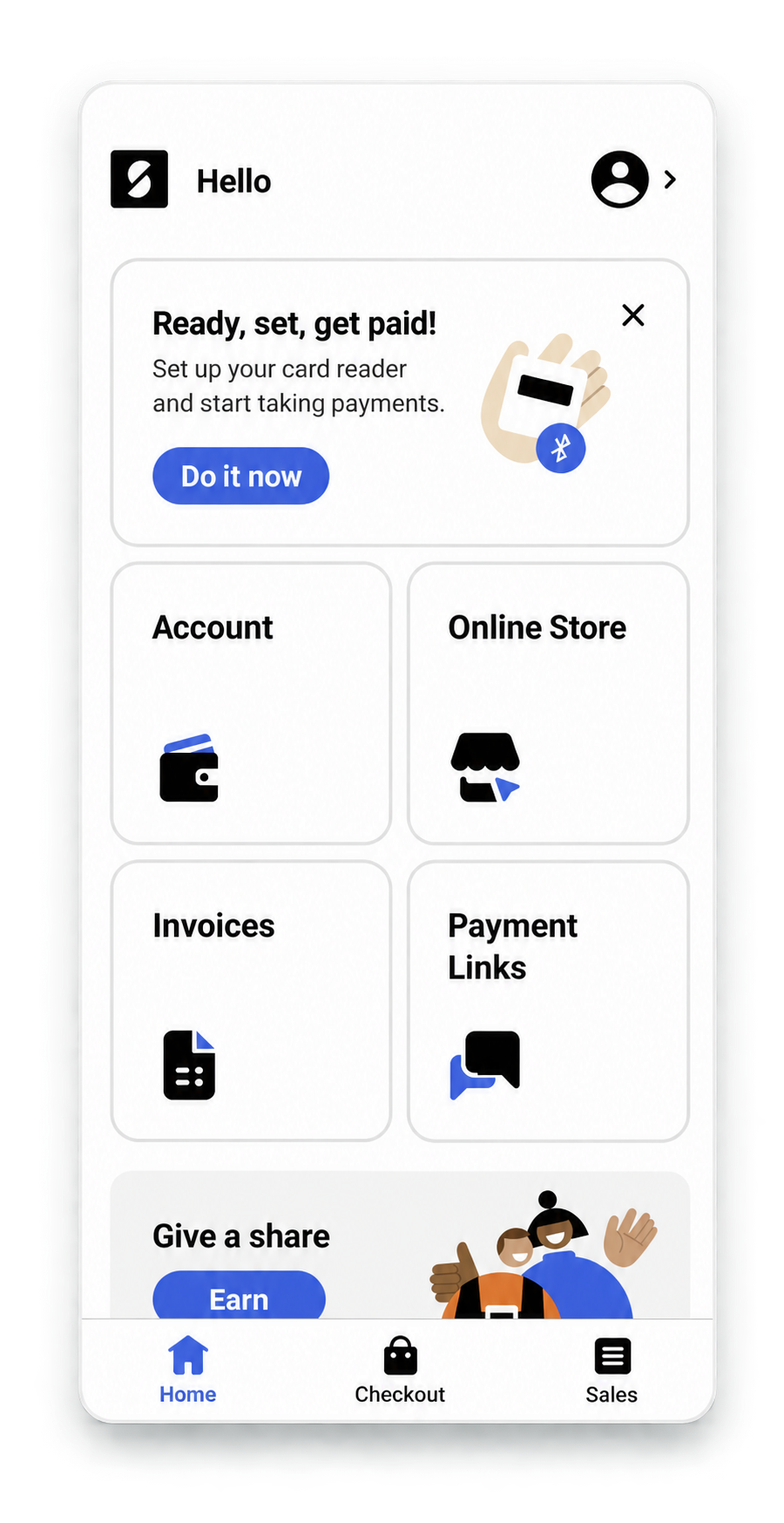
From a dedicated referral to a connected Super App experience.
Iterated on entry points, referral moments, progress states and reward visibility while adapting the experience for migration into the Super App.
02 · Happy journey
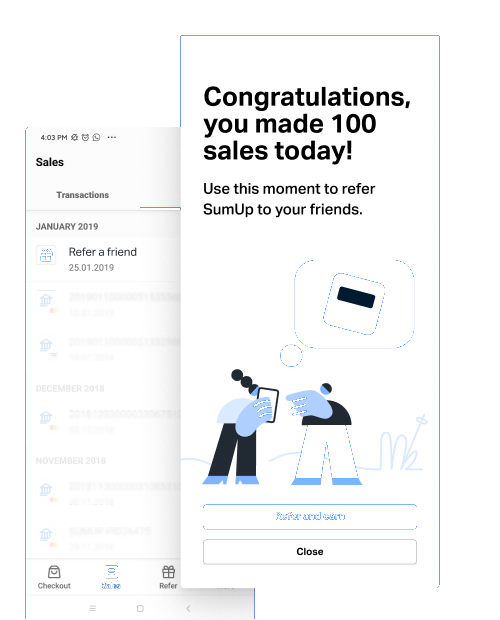
Prompt sharing at the right moment.
Journey mapping identified relevant referral moments after payouts, sales and other key interactions.
03 · Progress and history
Make the referral journey easier to follow.
Current challenges, previous challenges and reward history gave merchants clearer progress visibility.
04 · Value proposition
Make the reasons to refer more relevant than cash alone.
Clarify the product value, friend benefit, programme rewards and progress that influence merchants’ decisions to share.
05 · Measurement and scale
Turn referral activity into a reusable growth pattern.
Created a framework connecting referral behaviour, conversion, satisfaction and Customer Support tickets related to the company and programme.
06 Impact
XX* %Referral conversion rate+20%Increase in link shares after implementation93/100Average programme satisfaction score2 productsReferral pattern designed for Refer a Friend and later extended to Bank
07 Prototype
See it in action
Follow the journey from referral prompt to reward.
Merchant
The merchant reaches a milestone, discovers the referral prompt, shares a link and tracks the reward.